
Building what I’ve never built.
I learn by building. When something is new to me — real-time multiplayer, game engines — I take it on as a real project: plan it, write down the rules, direct AI coding agents, and keep notes on what held up. Games aren’t my job; learning fast is.
 What I’m testing
- Can agents follow architecture decisions over hundreds of commits?
- How should work be split between more than one agent?
- What still needs a human to decide?
Zoo Together
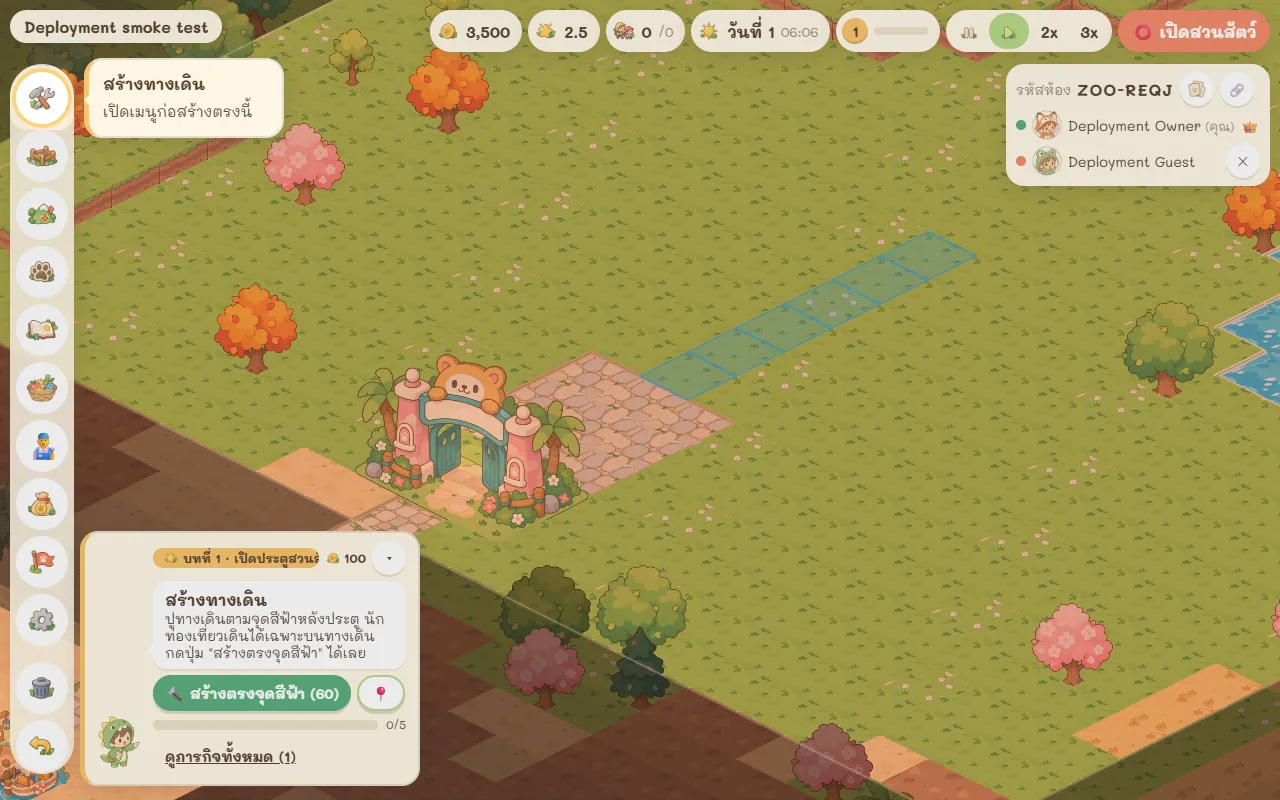
I had never written netcode. Could I build a 4-player real-time game where the server owns the truth?
Ten planned phases, a pure deterministic simulation package, every piece of content validated with Zod, and tests as the contract agents had to pass.
- Clients send intents, the server validates and returns small deltas — a rule that made it hard for agents to drift.
- Moving characters are sent as path + start tick + speed and interpolated on the client.
React · PixiJS v8 · Colyseus · Prisma · PostgreSQL · Vitest · Playwright
Results
24 Oct → 1 Nov 2026 · 20 commits · fully agent-built Results
- 20 species and 190 hybrids
- 60 FPS with ~1,550 sprites
- The zoo reopens from PostgreSQL after a server restart
What went wrong — and how I fixed it
 What went wrong — and how I fixed it
Real problems from the commit history, not a highlight reel.
- 01Problem
The economy felt dead: a 10-day headless run gave 55% satisfaction and ~24 visitors a day.
How I fixed itRetuned demand, prices and needs — ~140 visitors a day and 77% satisfaction.
- 02Problem
Refreshing was refused as “already connected”.
How I fixed itThe newest connection replaces the old one, with a regression test.
- 03Problem
The art weighed 189 MB.
How I fixed itWebP and 4K backgrounds scaled down — 43 MB.
- 04Problem
The deploy stalled: the agent couldn’t click through the Dokploy UI.
How I fixed itLesson: clicking through web UIs is where agents hit their limit; it needs an API key instead.
 How I fixed it
Screens
6 screens · click to enlarge Screens
The Age of Lost Knowledge
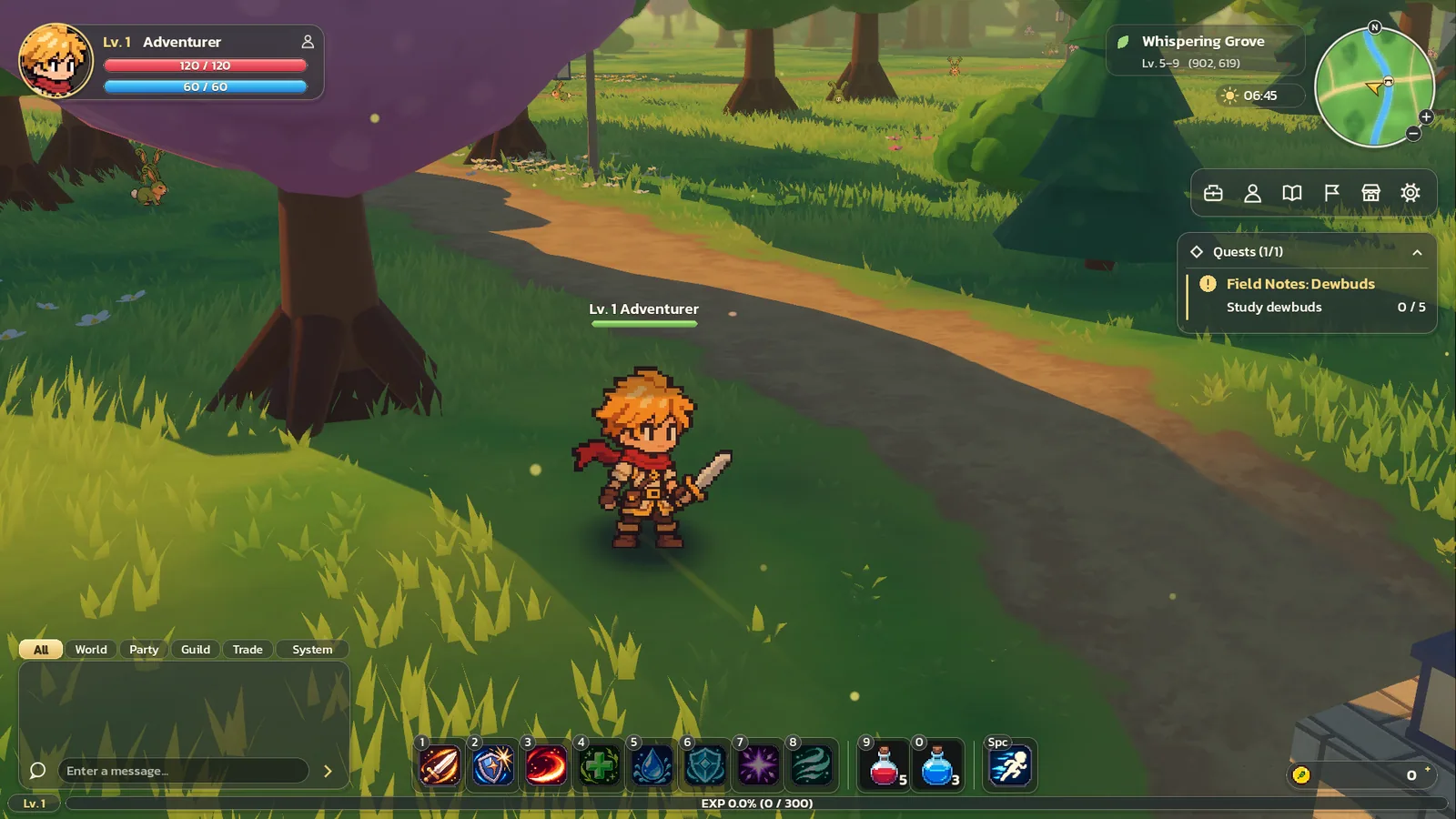
Can two different AI agents work on one large codebase without stepping on each other?
AGENTS.md splits ownership between Claude and Codex; every architecture decision is an ADR. The game moved from 2D to a 3D HD-2D world (2D characters in 3D scenes) on Godot 4 .NET, with a pure C# core and a dedicated server.
- Every rule lives in the repo, not in a chat — each new session starts from the same context.
- Clients never own game state: input → intent → simulation → snapshot.
Godot 4 .NET · HD-2D (3D) · C# · LiteNetLib · MemoryPack · xUnit
Results
15 → 21 Nov 2026 · 419 commits · two agents (Claude + Codex), one worktree each- 21 ADRs; 1,186 tests passing at HD-2D step 2
- Moved from 2D to 3D milestone by milestone (M0–M7), each gated by a ≥ 99.5% pixel diff
- Walking in 3D: mean 3.50 ms per frame, p99 6.87 ms
What went wrong — and how I fixed it
Real problems from the commit history, not a highlight reel.
- 01Problem
Codex reviewing Claude’s combat code found an exploit: 1,000 requests in one tick gave 1,000 hits.
How I fixed it500 ms cooldown, max 8 actions per tick, and EXP only for damage actually dealt (ADR-012).
- 02Problem
Frame stalls.
How I fixed itBuilt a per-frame profiler and redrew the HUD only on change — allocations 3.6 → 1.9 GB per run.
- 03Problem
Too many draw calls.
How I fixed itA shared 2048 atlas and batched name plates — combat draw p95 327 → 248, texture memory 163 → 89 MB.
- 04Problem
A flaky network test (2 of 6 under load).
How I fixed itCondition-based waits instead of fixed ones — 12/12 under a 16-core load.
- 05Problem
Art direction kept changing (ADR-016 → 020).
How I fixed itEvery asset needs owner approval; unapproved art renders as white boxes.
Screens
15 screens · click to enlargeThe same idea — rules written down where agents can read them — is behind Sage, the ruleset I use for AI coding every day.
sage.qorstack.com